As I said a couple of days ago, I’m visiting family in the Port City. It’s been great and I’m heading back to the suburbs of H-Town tomorrow. Tonight I’m giving y’all a preview of one of my favorite women, Zelda Fitzgerald: her most well-known quote and the Pet Shop Boys song it inspired.
“She refused to be bored chiefly because she wasn’t boring.”
— Zelda Fitzgerald, The Collected Writings of Zelda Fitzgerald
“Being Boring” by The Pet Shop Boys (nudity warning)
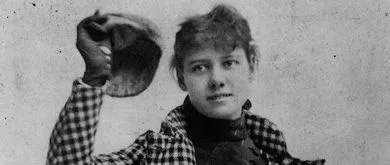
Nellie Bly, was the first woman journalist I ever read about. I learned about her in Journalism class in 9th grade and I knew I wanted to be like her. She’s not someone you learned about in a history class, most likely. was an American journalist, industrialist, inventor, and charity worker who was widely known for her record-breaking trip around the world in 72 days, in emulation of Jules Verne’s fictional character Phileas Fogg, and an exposé in which she worked undercover to report on a mental institution from within. She was a pioneer in her field and launched a new kind of investigative journalism.
The Pennsylvania-born Elizabeth Cochran, known later in life by her pseudonym Nellie Bly, made important contributions to journalism, charity, and social reform. She began her career with a brief stint at the Indiana State Normal School in 1879, which trained and educated teachers. As the available money for her schooling venture quickly dried up, her collegiate experience was cut short.
Following her short-lived time at Indiana State Normal School, Cochrane (who changed the spelling of her name as a teenager) broke into writing in 1885, when she was 21 years old. She got her first gig working for the Pittsburgh Dispatch—a job offer that came about in an unexpected way.
After reading an article published in the newspaper titled “What Girls Are Good For”—which neglected women’s abilities to contribute to the workforce, and declared they should be relegated to homemaking and childrearing—Cochrane penned a heated and verve-filled letter to the editor expressing her distaste for the piece. Her letter was signed, Lonely Orphan Girl.
The editor, in turn, was impressed enough to offer her a writing gig at the paper. Her bold convictions were backed up by an enticing literary flair. Very soon, Cochrane was proving just how much a woman could offer to the world, when given the opportunity.
Cochrane’s inaugural article in the Dispatch was about the necessity of reforming divorce laws, which she had some relevant knowledge of. Following her father’s death in 1871, when Cochrane was six years old, her mother had remarried and subsequently got divorced. Like her earlier letter to the editor, this piece was attributed to “Lonely Orphan Girl.” Women writers frequently used pseudonyms at this time. After this, however, it was decided that she needed a different pseudonym for her byline.
Cochrane decided her new pen name would be “Nelly Bly,” a character from a popular ditty composed by American songwriter and fellow Pennsylvanian, Stephen Foster. Foster’s verses sang of meritorious menial labor and of love. A few lines go like this:
You get the picture. The song serves up some romantic and rather tongue-in-cheek rhetoric. Cochrane’s editor misspelled Nelly as Nellie, and the mistake stuck. And while, to her audience, Nellie’s message may have sounded like anything but the gentle cooing of a turtle dove, her words nevertheless got the attention they seemed to demand from their readers.
From there, the writing career of one Nellie Bly grew by leaps and bounds. Her methods became increasingly investigative, and her subjects increasingly social in nature. Some of her reports helped shed light on the terrible living conditions of impoverished communities and the below-standard treatment of women in insane asylums.
From traveling through Mexico to going undercover in a mental hospital and posing as a patient suffering from mental illness, Bly’s work stands out for her personal investment in the story and her relentless dedication to digging beneath the surface.
Bly’s work became part of a growing movement in the journalistic profession; she is perhaps one of the earliest examples of that breed of reporters which came to be known as muckrakers. These were news writers who, in seeing wrongs perpetuated within society, sought reform—especially through exposing corruption and misconduct. Following her investigative ruse at the mental hospital, her findings were collected and published in Ten Days in a Mad House.
After regularly writing for the Pittsburgh Dispatch for a time, Bly moved to New York, where, despite her success, she was hard-pressed to find work as a female reporter. So, as she embarked on a period of job-hunting, she continued to contribute to the Dispatch on a freelance basis.
Eventually, she acquired a job at the New York World. Joseph Pulitzer, the famous newspaper publisher and the namesake of the now-revered Pulitzer Prize for writing, hired Bly to the publication, which he had bought out in 1883. Near the end of the decade, the growing newspaper gave Bly a unique, grandiose assignment: to travel around the globe in imitation of Phileas Fogg, the protagonist of Jules Verne’s fictitious Around the World in Eighty Days.
The coverage of this spectacle provided Bly with a larger-than-life public image. She even met Jules Verne himself at Amiens, France, a rendezvous in which the reporter got to interview the notable adventure fiction author.
Bly ultimately “beat” Phileas Fogg in the challenge by a matter of days, completing her globetrotting expedition in a mere 72 days, six hours, 11 minutes, and 14 seconds. Her written experiences from the trip were accumulated and published in a single volume under the oh-so-original title, Around the World in Seventy-Two Days.
Having conducted many other interviews and investigative reports during her time with the New York World, Nellie Bly would move on to write serialized fiction for another outlet. But she inevitably found her way back to hard journalism.
Bly moved to Chicago in 1895, where she soon met and married Robert Seaman, a wealthy industrialist. During this period of her life, Bly had the opportunity to speak with other amazing shapers of society, including women’s suffrage activist Susan B. Anthony.
Through her marriage to her millionaire husband, Bly became increasingly interested in the world of business at a time when industry was, by and large, undergoing a period of major change. When Seaman died in 1904, Bly had the opportunity to take the helm, as it were, of her late husband’s company. Over the next few years, Bly successfully filed patents for a number of inventions pertaining to oil manufacturing, and was one of the leading women industrialists in the United States. The company later went bankrupt due to employee embezzlement.
In her later years, Bly was irresistibly drawn back to her passion for reporting, particularly covering the women’s suffrage movement in the U.S. She also assisted orphans in finding good homes.
On January 22nd, 1922, Nellie Bly passed away at age 57 of complications due to heart disease and pneumonia. She left behind a legacy of compassion, concern, and courage that embodied not just the energy that stimulated the women’s rights movement but also, in many ways, what it takes to be a decent human being.
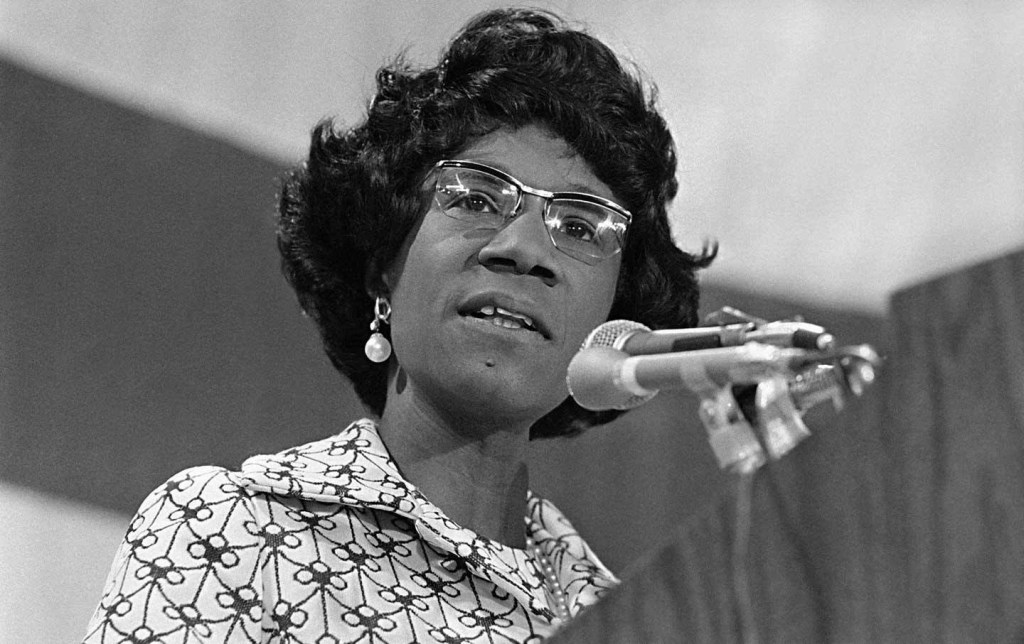
Shirley Anita Chisholm; November 30, 1924 – January 1, 2005) was an American politician, educator, and author. In 1968, she became the first black woman elected to the United States Congress.
Chisholm represented New York’s 12th congressional district, a district centered on Bedford–Stuyvesant, for seven terms from 1969 to 1983. In 1972, she became the first black candidate for a major-party nomination for President of the United States, and the first woman to run for the Democratic Party’s nomination.
Born in Brooklyn, New York, she spent a critical portion of her childhood in Barbados, where her family was from, and would always consider herself a Barbadian American. Back in the United States, Chisholm studied and worked in early childhood education, becoming involved in local Democratic party politics in the 1950s. In 1964, overcoming some resistance because she was a woman, she was elected to the New York State Assembly. Four years later she was elected to Congress, where she led expansion of food and nutrition programs for the poor and rose to party leadership. She retired from Congress in 1983 and taught at Mount Holyoke College, while continuing her political organizing. Although nominated for an ambassadorship in 1993, health issues caused her to withdraw. In 2015, Chisholm was posthumously awarded the Presidential Medal of Freedom.
Since note: I’m visiting my dad this week and I’m cheating by copying and pasting from Wikipedia. Just so y’all know, there is copy/pasting going on and I wanted to be forthcoming about it. Love you guys.
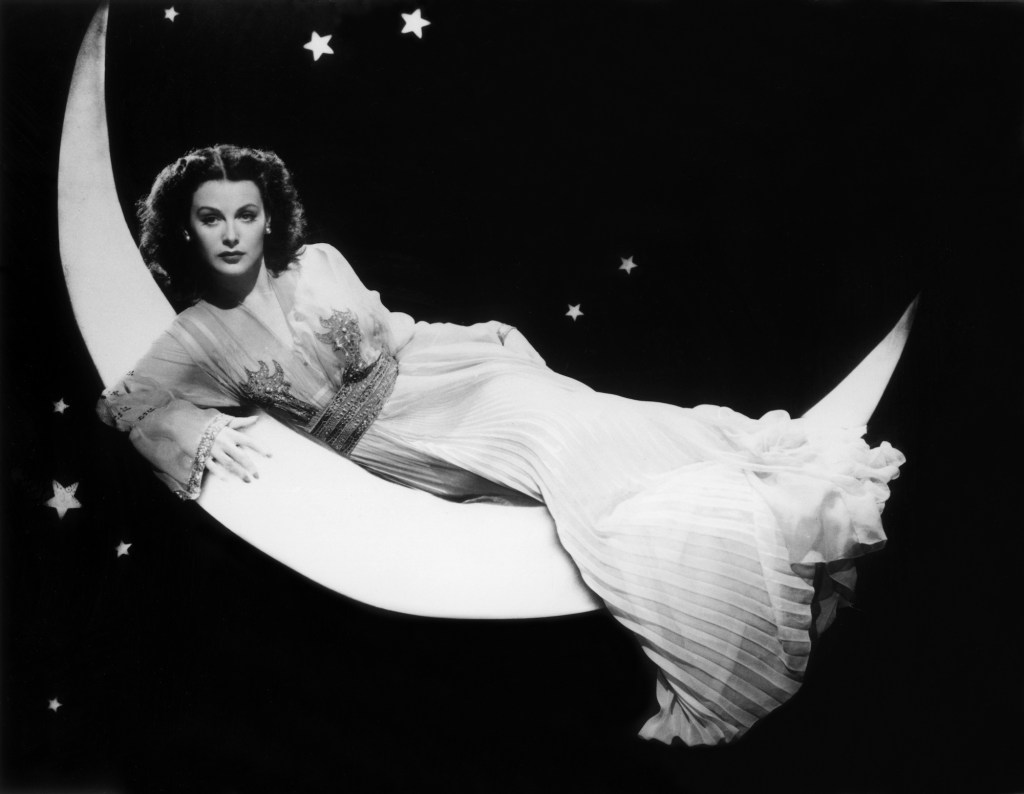
Hedy Lamaar was a gorgeous Austrian-born Hollywood actress who invented the precursor to Bluetooth. Yes, that Bluetooth. In 1940.
During World War II, Lamarr learned that radio-controlled torpedoes, an emerging technology in naval war, could easily be jammed and set off course. She thought of creating a frequency-hopping signal that could not be tracked or jammed. She contacted her friend, composer and pianist George Antheil, to help her develop a device for doing that, and he succeeded by synchronizing a miniaturized player-piano mechanism with radio signals. They drafted designs for the frequency-hopping system, which they patented.
Their invention was granted a patent under US Patent 2,292,387 on August 11, 1942 (filed using her married name Hedy Kiesler Markey).[46]However, it was technologically difficult to implement, and at that time the U.S. Navy was not receptive to considering inventions coming from outside the military. In 1962 (at the time of the Cuban Missile Crisis), an updated version of their design at last appeared on Navy ships.
In 1997, Lamarr and Antheil received the Electronic Frontier Foundation Pioneer Award and the Bulbie Gnass Spirit of Achievement Bronze Award, given to individuals whose creative lifetime achievements in the arts, sciences, business, or invention fields have significantly contributed to society. Lamarr was featured on the Science Channel and the Discovery Channel. In 2014, Lamarr and Antheil were posthumously inducted into the National Inventors Hall of Fame.
OH, AND SHE HAD NO FORMAL TRAINING IN SCIENCE. AT ALL. SHE WAS AN ACTRESS.
After a brief early film career in Czechoslovakia, including the controversial Ecstasy (1933), she fled from her husband, a wealthy Austrian ammunition manufacturer, and secretly moved to Paris. I can’t express how controversial Ecstasy tasy was. There isn’t really an equivalent today. She was virtually outcast. Traveling to London, she met Metro-Goldwyn-Mayer studio head Louis B. Mayer, who offered her a movie contract in Hollywood. She became a film star with her performance in Algiers (1938). Her MGM films include Lady of the Tropics (1939), Boom Town (1940), H.M. Pulham, Esq. (1941), and White Cargo (1942). Her greatest success was as Delilah in Cecil B. DeMille’s Samson and Delilah (1949). She also acted on television before the release of her final film, The Female Animal (1958). She was honored with a star on the Hollywood Walk of Fame in 1960.
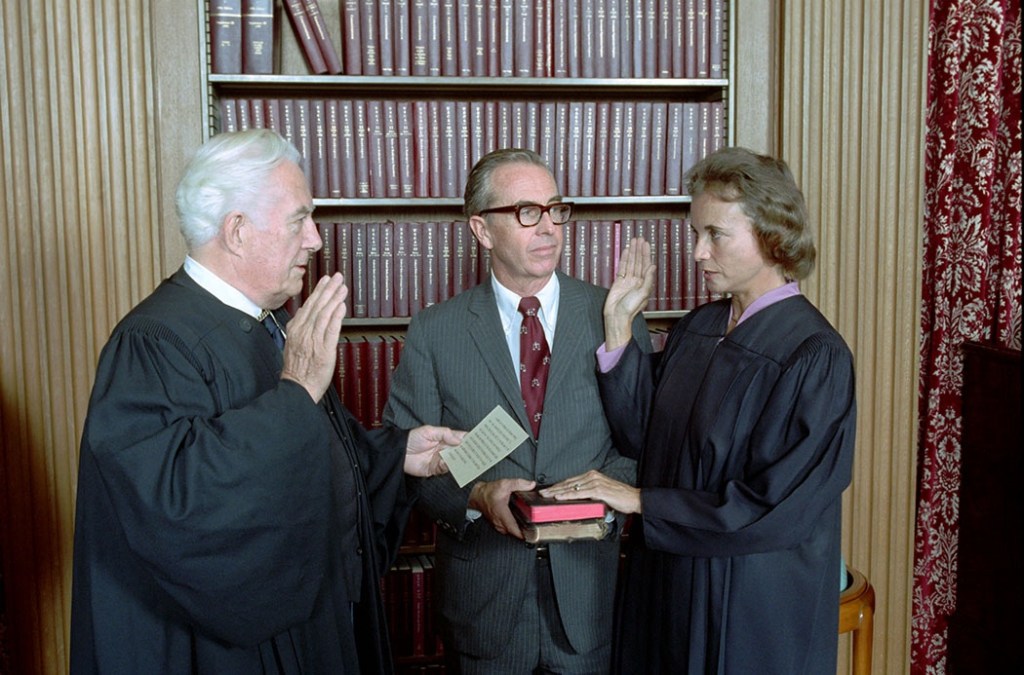
Sandra Day O’Connor was the first woman appointed to the U.S. Supreme Court. A Republican, she was considered a moderate conservative and served for 24 years.
Sandra Day O’Connor was elected to two terms in the Arizona state senate. In 1981, Ronald Reagan nominated her to the U.S. Supreme Court. She received unanimous Senate approval and made history as the first woman justice to serve on the nation’s highest court. O’Connor was a key swing vote in many important cases, including the upholding of Roe v. Wade. She retired in 2006 after serving for 24 years.
Born on March 26, 1930, in El Paso, Texas, O’Connor spent part of her youth on her family’s Arizona ranch. O’Connor was adept at riding and assisted with ranch duties. She later wrote about her rough and tumble childhood in her memoir, Lazy B: Growing Up on a Cattle Ranch in the American Southwest, published in 2002.
After graduating from Stanford University in 1950 with a bachelor’s degree in economics, O’Connor attended the university’s law school and received her degree in 1952, graduating third in her class. With opportunities for female lawyers very limited at the time, O’Connor struggled to find a job and worked without pay for the county attorney of California’s San Mateo region just to get her foot in the door. She soon became deputy county attorney.
From 1954-57, O’Connor moved overseas and served as a civilian lawyer for the Quartermaster Masker Center in Frankfurt, Germany. She returned home in 1958 and settled in Arizona. There she worked at a private practice before returning to public service, acting as the state’s assistant attorney general from 1965-69.Political Party
In 1969, O’Connor received a state senate appointment by Governor Jack Williams to fill a vacancy. A conservative Republican, O’Connor won reelection twice. In 1974 she took on a different challenge and ran for the position of judge in the Maricopa County Superior Court, winning the race.
As a judge, O’Connor developed a solid reputation for being firm but just. Outside of the courtroom, she remained involved in Republican politics. In 1979, O’Connor was selected to serve on the state’s court of appeals. Only two years later, President Ronald Reagan nominated her for associate justice of the U.S. Supreme Court. O’Connor received unanimous approval from the U.S. Senate and broke new ground for women when she was sworn in as the first female justice on the Supreme Court.
I love NASA. I grew up loving everything about astronauts and space travel. I didn’t want to be an astronaut, it was just a big interest. I did my science projects on space or space travel every year. When I was right, I discovered that if you wrote to NASA, telling them you wanted to become a teacher, they would send you a huge packet of stuff I could use in the science fair. I did that every year in elementary school.
Then I was nine and Sally Ride became the first American woman to go to space.
Sally Ride was the first American woman to go into space. She is famous for going into space when women were not known to be involved with the space program, though we know now she was far from it. When Ride was in college, she signed up for the NASA program. She was accepted and started training immediately. Ride had to endure through mental and physical training in order to go into space. In her time it was unknown for women to trsin at a space center. During that time, she wanted people of all race, gender, ethnicity, and religion to follow their dreams.
Ride was daring enough to risk her life by doing the things she loves the most, learning about space. She did something that most people would never be able to do. Not only did she risk her life once, but she also went to space two more times. From June 18 to June 24, 1983, flight STS-7 of the space shuttle Challenger launched from Kennedy Space Center in Florida, orbited Earth for six days, returned to Earth, and landed at Edwards Air Force Base in California.
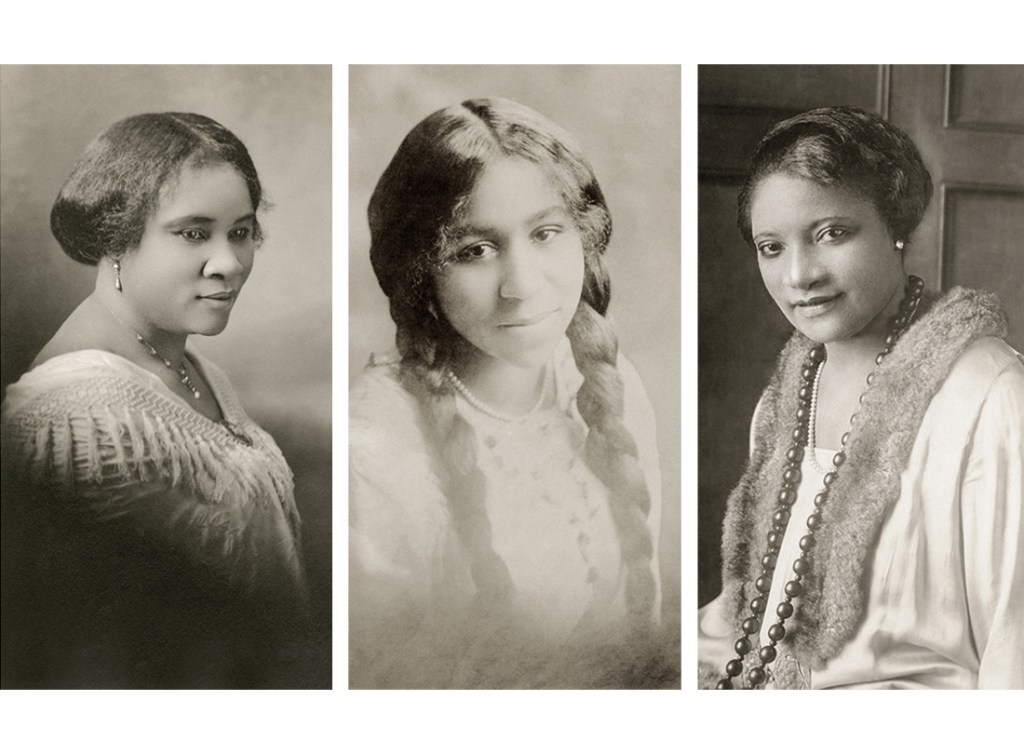
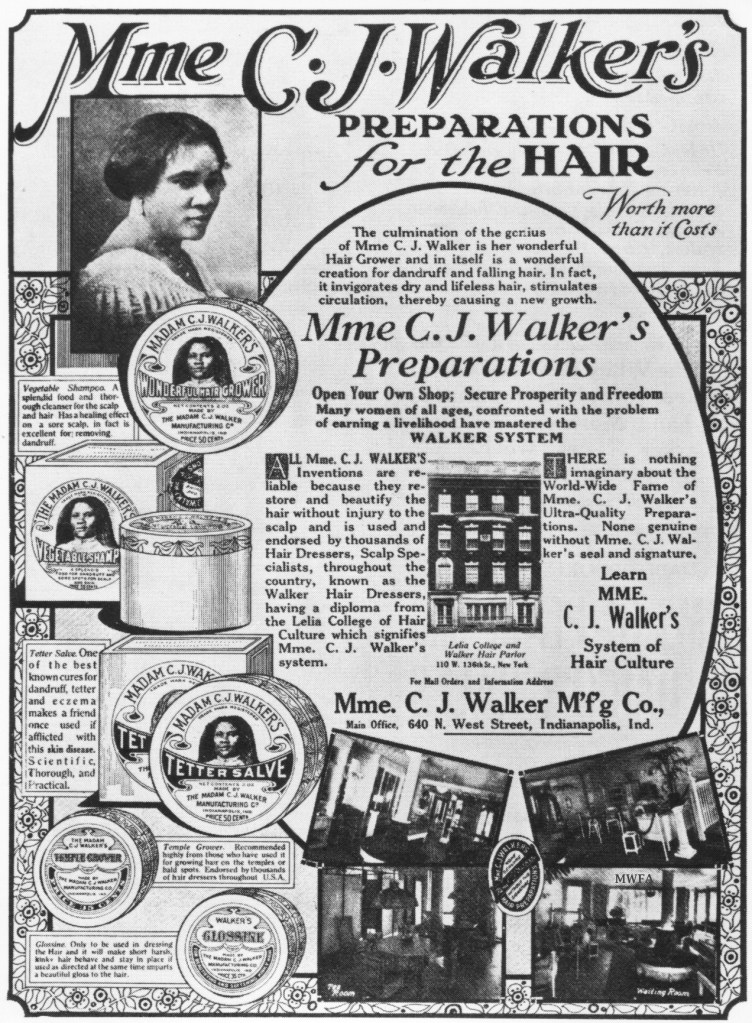
Madam C.J. Walker invented a line of African American hair products after suffering from a scalp ailment that resulted in her own hair loss. She promoted her products by traveling around the country giving lecture-demonstrations and eventually established Madame C.J. Walker Laboratories to manufacture cosmetics and train sales beauticians.
Her business acumen led her to be one of the first American women to become a self-made millionaire. She was also known for her philanthropic endeavors, including a donation toward the construction of an Indianapolis YMCA in 1913. Walker’s life was portrayed in the 2020 TV show Self Made, with Octavia Spencer portraying Walker.
Walker was born Sarah Breedlove on December 23, 1867, on a cotton plantation near Delta, Louisiana. She was the first in her family to be free-born. Sarah became an orphan and lived with relatives in Mississippi. There, she married a man, had a daughter, and became a widow after two years. Sarah moved to St. Louis with her daughter and attended high school there. Shhe met husband Charles J. Walker, who worked in advertising and would later help promote her hair care business.
After Sarah started losing hair because of a scalp condition, she began to experiment with both home remedies and store-bought hair care treatments in an attempt to improve her condition. In 1905, she was hired as a commission agent by Annie Turnbo Malone — a successful, Black, hair-care product entrepreneur — and she moved to Denver, Colorado. While there, she perfected her own treatments and started a company, Madam C.J. Walker, taking her husband’s initials. She became known as Madam C.J. Walker as well.
In 1907 Walker and her husband traveled around the South and Southeast promoting her products and giving lecture demonstrations of her “Walker Method” — involving her own formula for pomade, brushing and the use of heated combs.
In Indianapolis, the company not only manufactured cosmetics but also trained sales beauticians. These “Walker Agents” became well known throughout the Black communities of the United States. In turn, they promoted Walker’s philosophy of “cleanliness and loveliness” as a means of advancing the status of African Americans.
Her story is worth reading more about or watching the show Self Made. Much of this post is from Biography.com, where you can find tons of bios on women this month.
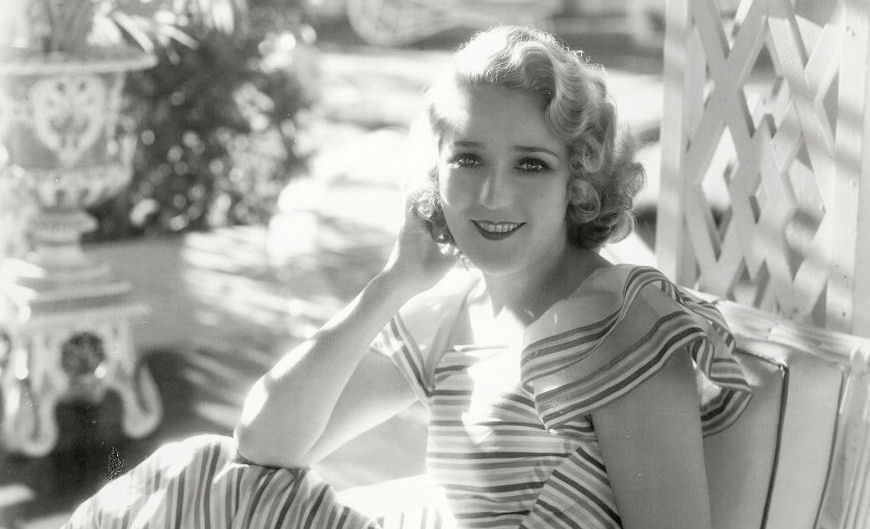
Here’s another first. I love Mary Pickford because she was a first.
Mary Pickford became one of Hollywood’s most powerful executives during its formative years. She entered acting at age six, first in Vaudeville and then in 1909 transitioned to film. Her popularity and shrewd business sense led to her record-setting salaries. In 1919, Pickford co-founded United Artists with Douglas Fairbanks, D.W. Griffith, and Charlie Chaplin to distribute films they produced, giving them artistic control and a large share of profits. Pickford spearheaded the founding of the Academy of Motion Picture Arts and Sciences and received the Best Actress Oscar in 1929.
Did you get all of those firsts? She was the first woman to co-found a movie studio, co-founded the Academy of Motion Picture Arts and Sciences, and received the second Oscar ever for leading actress for her first film with sound. Most of her big accomplishments were made before she ever was in a “talkie.” That’s wild.
Mary Pickford was one of the earliest stars to be billed under her own name. Can you imagine a time when movies were only known in print or trailers as the title and the tagline? I can’t. Except for Jaws. She appeared in 51 films in 1909 – almost one a week. 51! Pickford starred in 52 features (full-length) throughout her career. On June 24, 1916, Pickford signed a new contract with Adolph Zukor that granted her full authority over production of the films in which she starred, and a record-breaking salary of $10,000 a week. In addition, Pickford’s compensation was half of a film’s profits, with a guarantee of $1,040,000 (US$18,720,000 in 2022), making her the first actress to sign a million-dollar contract. She also became vice-president of Pickford Film Corporation. Over a million dollars in 1916. Just for an idea of how much money that was in 1916, The Crane-Simplex, the most expensive car you could buy at that time was $10,000.
Mary was married three times, once to United Artists co-founder, Douglas Fairbanks, and had two children. Sadly, she became an alcoholic and a recluse, but lived to be 87. In 1976, she received an Academy Honorary Award for her contribution to American film. An extraordinary contribution to film . I would be hard-pressed to think of a woman contributing more to American film than Mary Pickford.
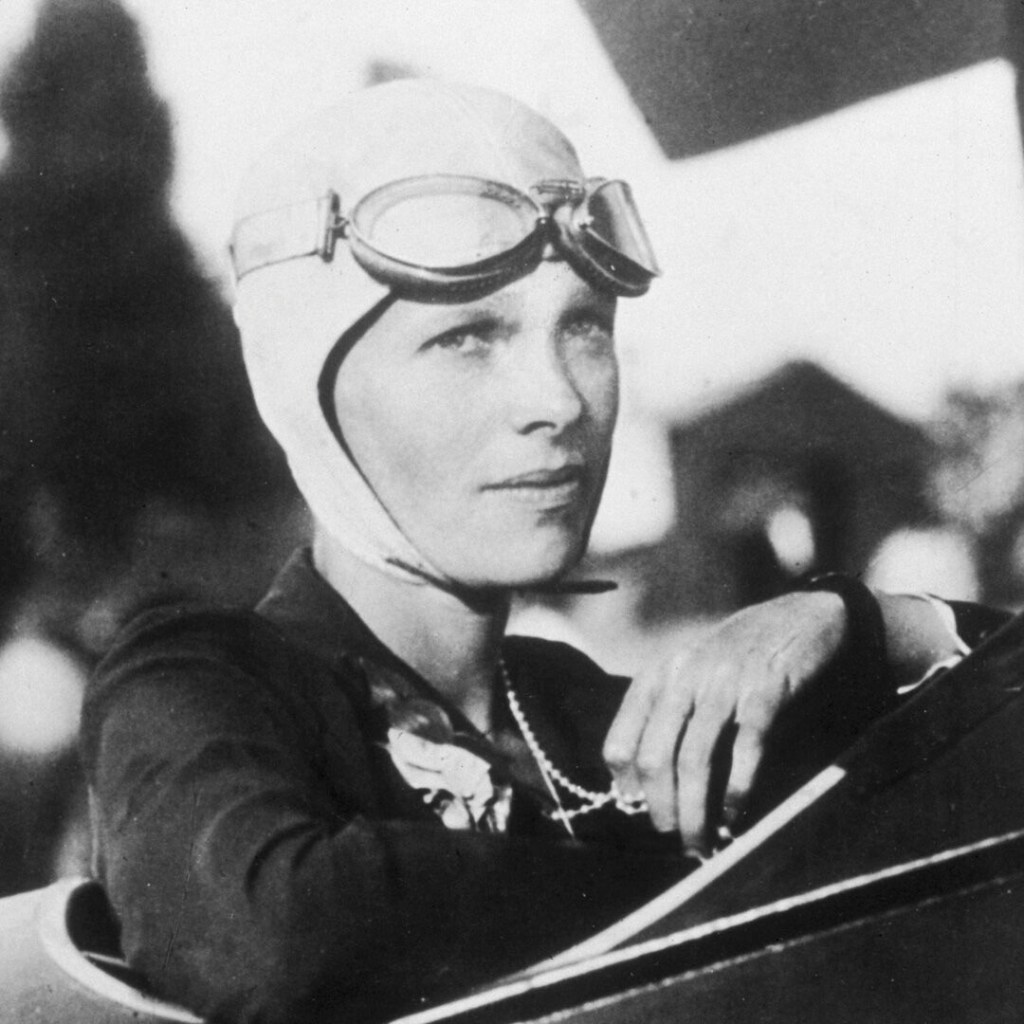
My obsession with Amelia Earhart began early in my childhood, the same as at least five of the women in this series. I never wanted to be a pilot. Heck, I didn’t fly until I was 20, but I admire women who are fearless and that’s what Amelia Earhart was.
Amelia Earhart, fondly known was an American aviator who mysteriously disappeared in 1937 while trying to circumnavigate the globe from the equator. She was the 16th woman to be issued a pilot’s license! In the world! She had several notable flights, including becoming the first woman to fly across the Atlantic Ocean in 1928, as well as the first person to fly over both the Atlantic and Pacific. Earhart was legally declared dead in 1939. I know, I know.
Amelia volunteered as a nurse’s aide for the Red Cross when soldiers started coming home from WW1. Earhart came to know many wounded pilots. She developed a strong admiration for aviators, spending much of her free time watching the Royal Flying Corps practicing at the airfield nearby. She spent one year at Columbia majoring in medicine, but it wasn’t for her. At a Long Beach air show in 1920, Earhart took a plane ride that transformed her life. It was only 10 minutes, but when she landed she knew she had to learn to fly. Working at a variety of jobs, from photographer to truck driver, she earned enough money to take flying lessons from pioneer female aviator Anita “Neta” Snook.
In the summer of 1921, Earhart purchased a second-hand Kinner Airster biplane painted bright yellow. She nicknamed it “The Canary,” and set out to make a name for herself in aviation. She took a variety of jobs to make enough money to keep flying. She set records. Lots. In 1928, Earhart wrote a book about aviation and her transatlantic experience, 20 Hrs., 40 Min. She married the publisher of her book, George Putnam.
Here’s where we get sad. Amelia’s attempt to be the first person to circumnavigate the earth around the equator ultimately resulted in her disappearance on July 2, 1937. Earhart purchased a Lockheed Electra L-10E plane and pulled together a top-rated crew of three men: Captain Harry Manning, Fred Noonan and Paul Mantz. The original plan was to take off from Oakland, California, and fly west to Hawaii. From there, the group would fly across the Pacific Ocean to Australia. Then they would cross the sub-continent of India, on to Africa, then to Florida, and back to California. When the Itasca realized that they had lost contact, they began an immediate search. Despite the efforts of 66 aircraft and nine ships — an estimated $4 million rescue authorized by President Franklin D. Roosevelt — the fate of the two flyers remained a mystery. The official search ended on July 18, 1937, but Putnam financed additional search efforts, working off tips of naval experts and even psychics in an attempt to find his wife. In October 1937, he acknowledged that any chance of Earhart and Noonan surviving was gone. On January 5, 1939, Earhart was declared legally dead by the Superior Court in Los Angeles.
So, the conspiracist in me says, so that’s how they say what happened. I’m sure it is. Maybe it’s the way she would have liked to die, flying. But it’s incredibly sad.
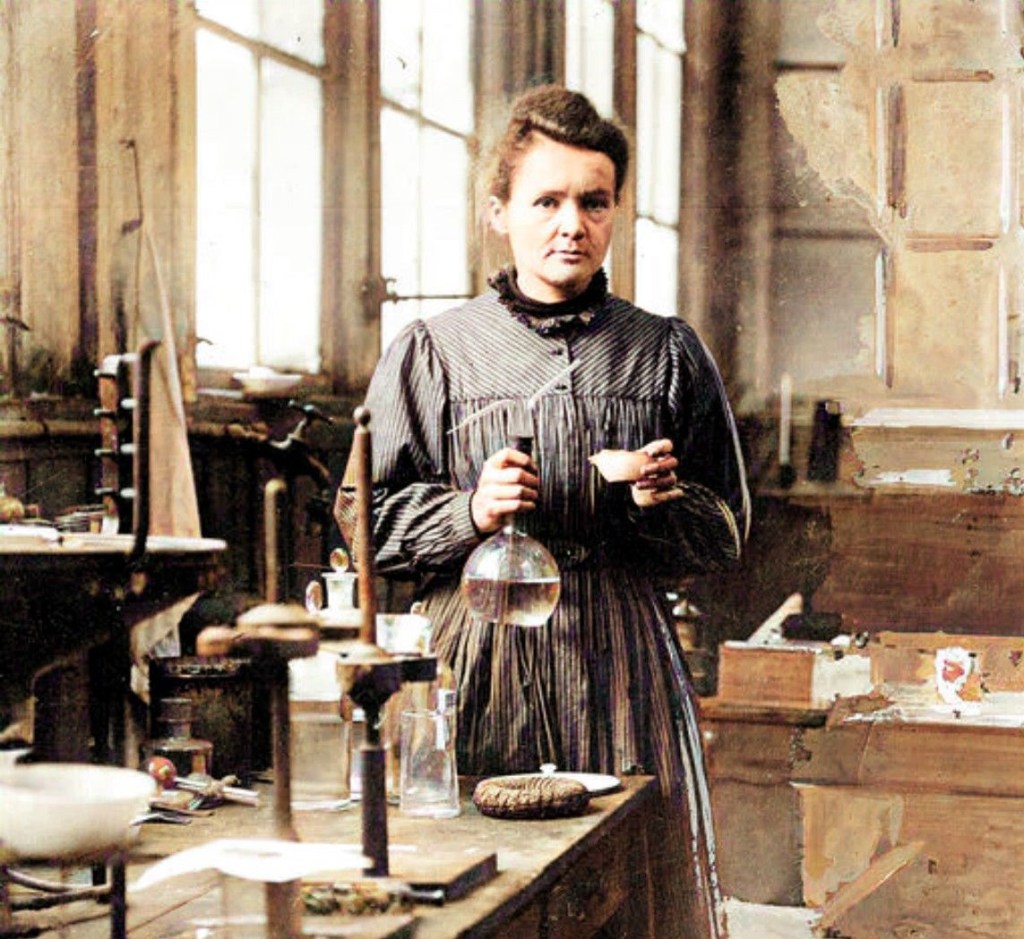
For the rest of the month, I’m going to tell y’all about my women heroes. I’m starting with Marie Curie because I’ve been fascinated by her since I was in elementary school.
Marie Curie was the first woman to win a Nobel Prize, in Physics, and with her later win, in Chemistry, she became the first person to claim Nobel honors twice. Her efforts with her husband Pierre led to the discovery of polonium and radium, and she championed the development of X-rays.
She was born Maria Sklodowska in what is now modern-day Poland. Her parents were math and physics teachers and Maria took after them. She could not attend the male-only University of Warsaw. She instead continued her education in Warsaw’s “floating university,” a set of underground, informal classes held in secret.
After a few years of tutoring and working as a governess, Maria changed her name to Marie and enrolled at the Sorbonne in Paris. While at the Sorbonne, with little money, she lived on buttered bread and tea. She met Pierre Curie through a friend and He just happened to have a lab in which she could conduct her experiments on steel and magnetic properties.
Marie and Pierre had all kinds of chemistry (and physics) and we’re married and had two daughters all while doing earth-shattering science work. It’s almost criminal that they only had ten years together, as Pierre accidentally stepped in front of a horse-drawn carriage and died in 1905.
After his death, Marie took over her husband’s teaching post at the Sorbonne, becoming the institution’s first female professor. How many “firsts” is that? Marie died in 1934 of aplastic anemia likely caused by exposure to radiation.
It was her discovery that paved the way towards evolution in medicine and the development of atomic bombs. We owe so much to Marie Curie. That is an enormous understatement. I

 kerryfaler.blog