 Probably more than any self-help book, article, or therapist, Carrie Fisher helped me to understand mental illness and specifically our shared mental illness, Bipolar Disorder. Although I’m Type 2: Electric Boogaloo and she was Type 1: A New Hope.
It was her books that inspired me in the way that I deal with my illness. She was and is an inspiration to me. She was the only person who put the illness into words that made sense – that weren’t clinical, besides faceless bloggers (like me) who write about their experiences. It was different to read about how one of my heroes (on screen and in the written word) handled her illness. The openness was refreshing and scary. Those words can describe Bipolar Disorder pretty well, actually.
Carrie Fisher was first diagnosed at 24, or at least in interviews she said a doctor tried to diagnose her, but she was doing drugs at the time and addicts can’t be properly diagnosed when they’re using. Then, at 29, when she was sober, she was officially diagnosed. I wasn’t properly diagnosed until I was 39. I can’t imagine how different my life might have been if a psychiatrist would have diagnosed me almost 10 years earlier when I first saw a psychiatrist. But then again, Carrie Fisher was diagnosed and treated, and died of “sleep apnea with other factors” last year. Her daughter, Billie Lourd stated, “My mom battled drug addiction and mental illness her entire life. She ultimately died of it. She was purposefully open in all of her work about the social stigmas surrounding these diseases.”
 It’s the stigma versus the truth I’ve been writing about for the past few years. Most people assumed and still assume Carrie Fisher committed suicide or died from a drug overdose. And yes, drugs may have played a part in her death because drugs were found in her system.
When her autopsy was finally made available I was relieved it wasn’t suicide. Not because she wasn’t a hero of mine. Because after I was diagnosed as Bipolar I did what I do when I get any diagnosis or start any new medication: I Googled the shit out of it. I read everything I could find on it because I didn’t want to be the Bipolar You Know — the split screen picture of a woman who looks like hell and the same woman who is dancing on a table? Or those stupid drama/comedy masks? For the love of Fisher, they show up when you Google “Bipolar.” God, I hate those. Or Claire Danes in Homeland? Usually in the first paragraphs of articles about Bipolar you read a sentence like this: the suicide rate in Bipolar individuals is about 30 times higher than than that of the general population. Go, us! “Have a good day, honey! Try to be in that 70%!”
That’s a scary statistic. And it’s scary. Especially since I was in the 1% who had the worst reaction to a drug a few months ago. Why can’t I be in a good percentage? Like the extremely wealthy 1%?
Despite addiction and being Bipolar, Carrie Fisher had one hell of a career as an actor and an author. Star Wars was the first movie I saw as a three year old. I didn’t come to understand it until many years later, but I knew I loved Princess Leia. Then I loved her as Marie in When Harry Met Sally. “Someone’s staring at you in Personal Growth.” Then I delved into her novels. I read Postcards From the Edge and Surrender the Pink in high school and soaked them in. Even though I had no experience with drugs or the adult themes. In just the past few years I’ve read or listened on Audible to her biographies, and that’s when I got to know Carrie Fisher, the woman and the mentally ill woman. She writes about it with complete honesty, which I truly admire. Total transparency. It was what I needed to hear. She was my aunt who had been there and authenticated my thoughts and experiences.
An interviewer asked a good question to Carrie Fisher:
Q: What is it like to plan your life, and career, around mental illness?
A: I don’t. You cross your fingers and hope you don’t get gobsmacked by it in the middle of something.
And that’s the thing – being gobsmacked in the middle of something. Because we’re always in the middle of something. Bipolar Disorder is a one-two punch of a disorder. I can think I’m fine and that nothing is wrong – and nothing seems wrong – but friends can tell when I’m talking fast or over reacting. That’s the hypomanic part of my illness. I hate the racing thoughts.
I need to write this down right now because if I don’t I’m going to forget to tell Dana this story. Remember to get red spray paint, but not the gloss, get the matte. Download that book about who really wrote Shakespeare. Crap. I forgot the name of the book. I need to do a canvas of “God Only Knows.” Did I order a new Macbook Pro cord? Must order cord. Did I take my Lithium? Does Andrew have practice today? I need to make a hair appointment. I’m just going to get my layers trimmed. Maybe a Pixie cut. Yeah, I liked it when I had one. But I was going to keep my length. Maybe just a couple of inches. The salon is by Old Navy and I should get Molly new jeans. I don’t want to go in there, I can just order jeans. But what size is she? I have to take the dog out.
So, maybe I am crazy. What kind of person takes her dog outside and screams “STOP IT! THAT’S ENOUGH!” in their nightie from her patio to neighbors who are setting off fireworks in the middle of August then bursts into tears upon re-entering her house? That’s not normal. Nothing I do is normal. Normal is a place that doesn’t exist. The parts of being hypomanic are fantastic and scary. I enjoy the hell out of things. I get angry on the verge of rage at other times, sometimes it’s something to be legitimately angry about, sometimes not, but usually not deserving of the depth of anger I have. I play a song over and over dozens of times because of how it makes me feel. I’m quick to make Notes in my iPhone because I know I’ll forget the thought in 10 minutes, 10 seconds. The next day I’ll have no idea what the notes mean.
Current Notes:
House – Learn to Live With What You Are
BenFolds5
Murder Book
Words on Podcasts
This is what happiness looks like in your brain
Hilarious World of Depression
Beck
Indigo Girls
Coffeespoons
2-55-0
I have no idea what any of those Notes are in reference to. No idea. But they were important enough in the moment to write down. Many of them are written during my racing thoughts as I’m going to bed. With my illness, during hypomania, I can’t hold onto a thought longer than your intelligent goldfish. That’s why I make notes. Or I ask friends or my kids to remind me to do something or to tell them something later. I obsessively check my texts as if I’m waiting for Publisher’s Clearinghouse to contact me. Sometimes I’m burdened with so many thoughts at once that I’m almost comatose on the sofa because I don’t know what to do first. Or I can’t remember what I was going to do. All day. A positive thing of hypomania is that my creativity knows no bounds. I write, I paint, I do typography, I paint furniture, I decorate, I make up witty quips for future use (not that I’ll remember what they’re for), I read everything I can get my hands on and Google the shit out of everything that crosses my mind. The second worst part of hypomania (the first being racing thoughts) is over thinking. Even more than the impulsivity, the over thinking is a killer. And the fear that the part of my illness that makes me productive will stop and the fear of depression.
Depression just sucks you into a dark place from everyone and everything you love. That’s all there is to it.
That’s my interpretation of being gobsmacked. I’ve never used the word “gobsmacked” in a blog post and look, I’ve used it three times. No cocktail of meds I’ve tried in the three years since I’ve been diagnosed have worked completely. But I wouldn’t expect that. Mental illness is a plug and play. Throw this at the wall and see if it sticks. Try a little of this, a little of that, increase the dosage on this, cut back on that. It’s far from an exact science and I know I’ll never be fine.
Not to take away from my sister-in-illness, Carrie Fisher, but in the Miami New Times in 2015, Adam Duritz said about his illness, “A few years after that, I realized I probably wasn’t ever going to be fine.When you have something wrong with you, you want to get better. You get strep throat and you expect an antibiotic to be healthy again. A lot of things in life work that way, but not everything does. That was a hard realization.” That’s kind of how I expected my medication cocktail to work, make me better and have no symptoms. What I learned it that it’s more like asthma, which I also have because of course I do. If you have asthma, you take a preventative everyday, but carry a rescue inhaler in case you have a flare up or an asthma attack. Asthmatics know their triggers. Mine are smoke, most perfumes/colognes, extreme cold, fresh cut grass, flowers, dust, etc. But that’s why you carry a rescue inhaler. That’s the difference between most illnesses and mental illness, there is no rescue inhaler – no nitroglycerine, no hydrocortisone, no adrenaline, no atropine (yes, I went to the Grey’s Anatomy/ER Medical School).
In his post-Carrie Fisher divorce album, Paul Simon wrote the song “Allergies,” containing a little gem of a lyric, “From what I can see of the people like me/We get better/But we never get well.” I think Carrie would definitely agree, after all, she was married to the man. And the album was about her.
So, Dear Reader, this was my love letter to Carrie Fisher. I’ve quite literally been working on it since January. And until today I quite literally could not get through a paragraph without tears. Her death made me incredibly sad; what I learned from her words while she lived makes me incredibly grateful. And it’s that gratefulness that will get me through that last book on Audible. Hearing her words spoken by her in my ear. I’m not going to be cliche and say “an angel from heaven,” because I hate that stuff, but definitely a brilliant woman who had brilliant things to say and to write and whose words have helped me in times when I needed them. And she also rose from Princess to General. And that’s pretty fantastic.


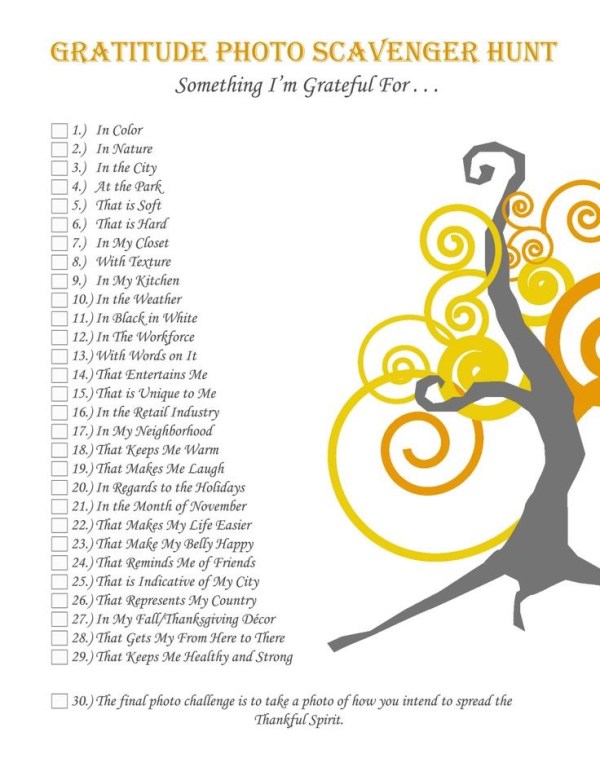 Y’all know I usually hate this kind of thing, but Hillary over at The Second Forty and I were looking for a November blog challenge and she found this one we kinda like.
 Sylvia Plath would have been 85 last week. I thought I’d write something about her.


